Proprietary hydrophilic glass
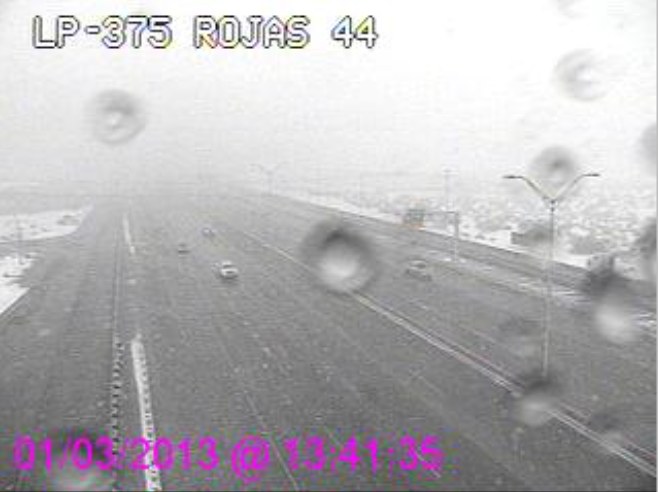
A proprietary coating on the Sidewinder window sheds water. Rain spreads into a thin film instead of beading, carries dirt off the glass, and dries without spots or streaks. No wiper is needed.
A dirty window cleared itself in a rain shower between 1:41 PM and 2:01 PM, with no service visit.
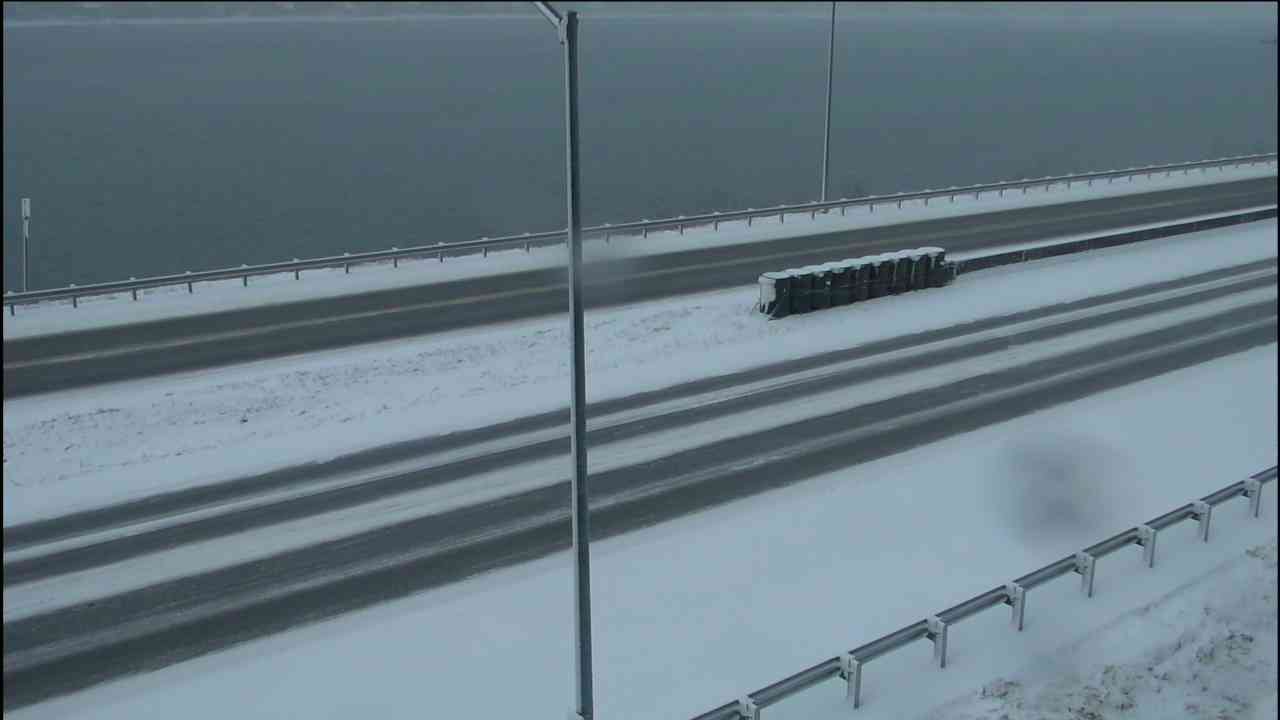
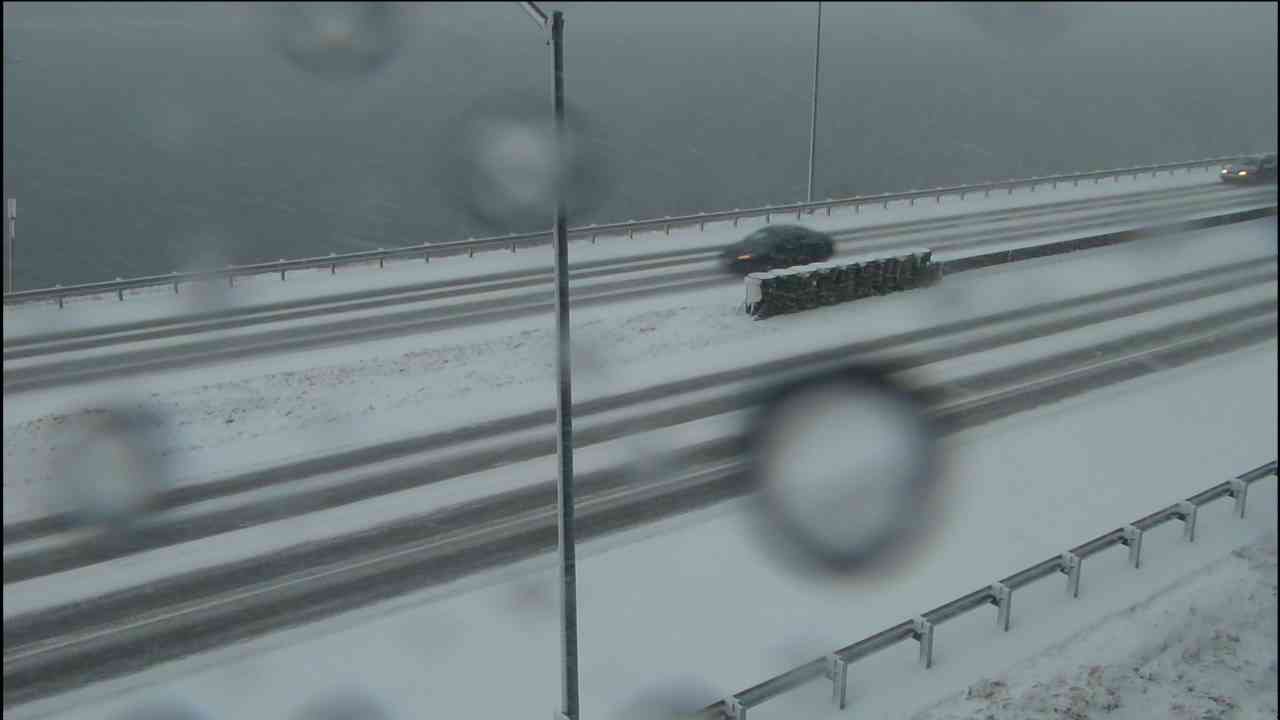
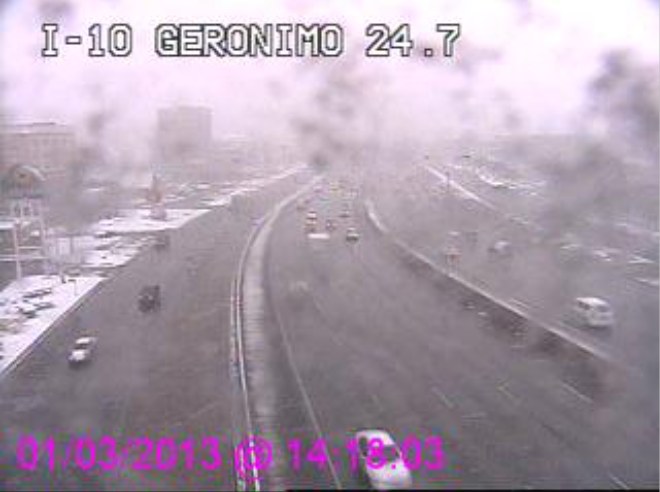
SIDE BY SIDE · TXDOT EL PASO · 01/03/2013
Same storm, same afternoon, two cameras less than an hour apart.
TEXAS ICE TESTS · TXDOT
Heated window that defrosts from the inside out
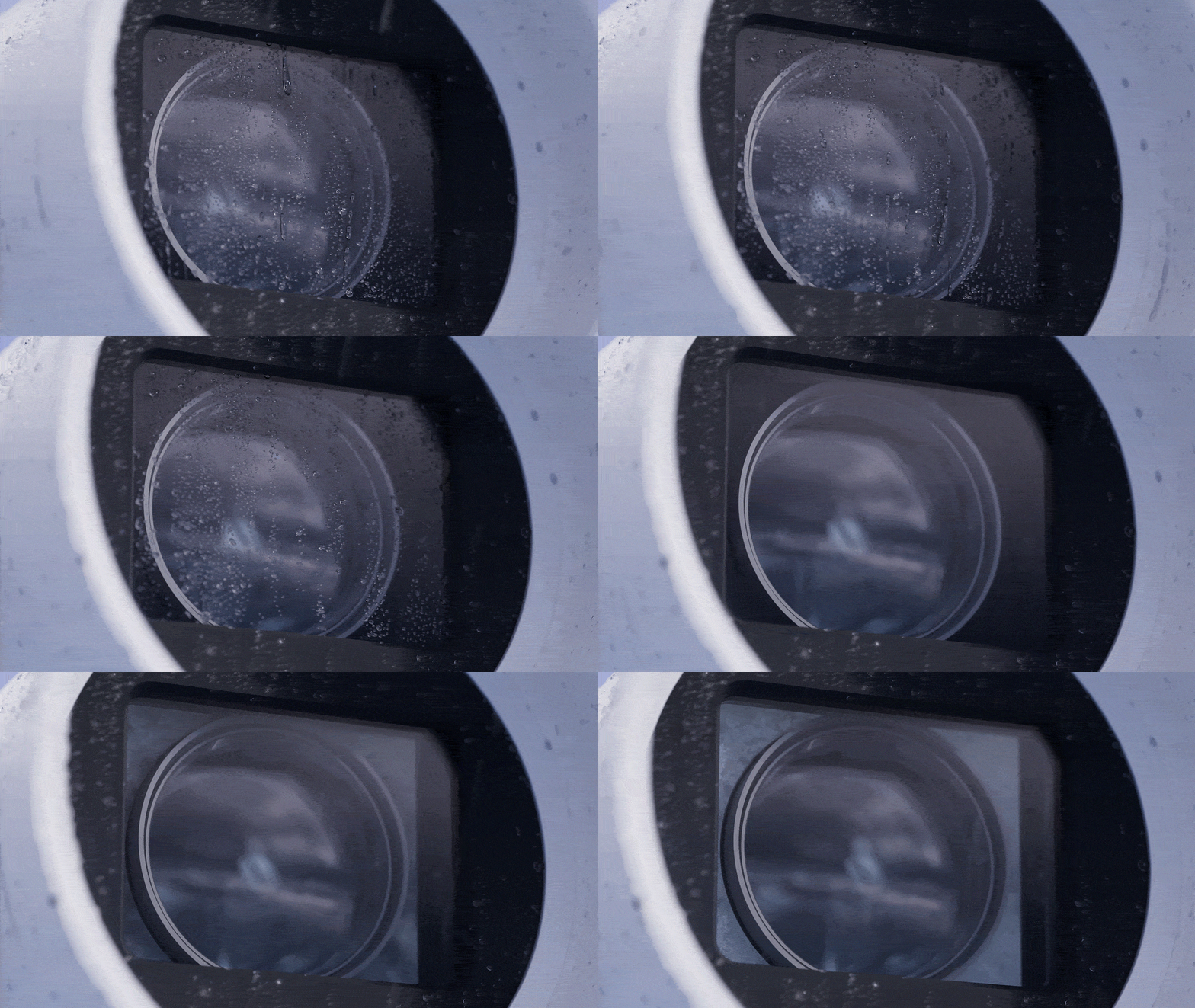
A conductive layer inside the window heats the glass itself, not the air around it. A faceplate temperature sensor closes the loop on heater control. In TxDOT's chamber tests the Sidewinder held a clear image to −20°F and recovered from a frozen, powered-off start in about 30 minutes.
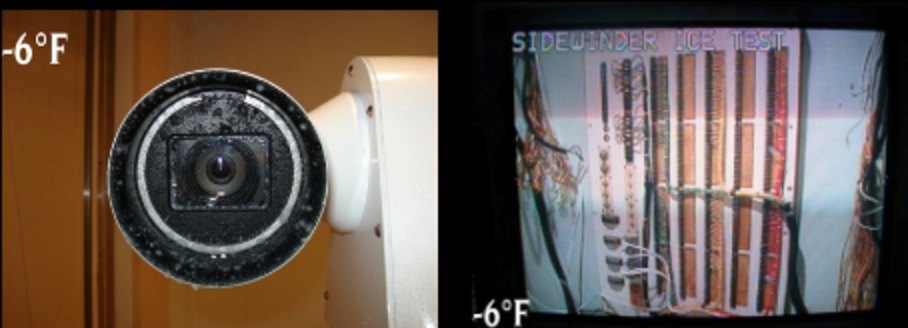
Window visibility as the chamber cools with the camera powered on.
Competing designs that heat only the border of the glass required +30°F to +40°F ambient to clear.
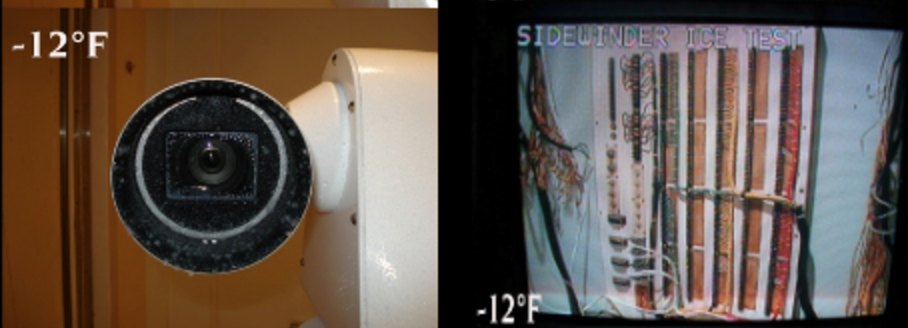
Window visibility as the chamber cools with the camera powered on.
Competing designs that heat only the border of the glass required +30°F to +40°F ambient to clear.
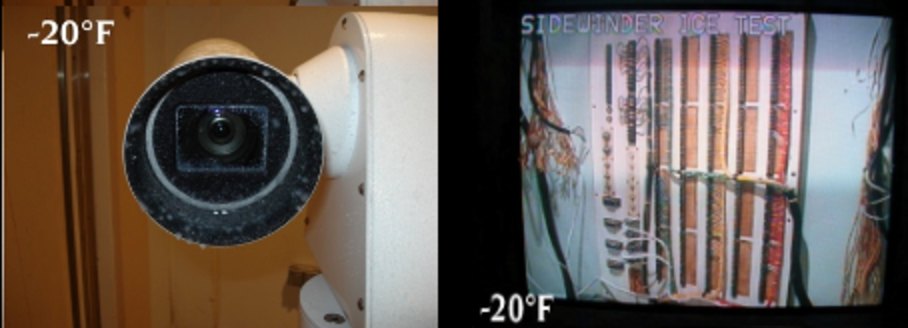
Window visibility as the chamber cools with the camera powered on.
Competing designs that heat only the border of the glass required +30°F to +40°F ambient to clear.
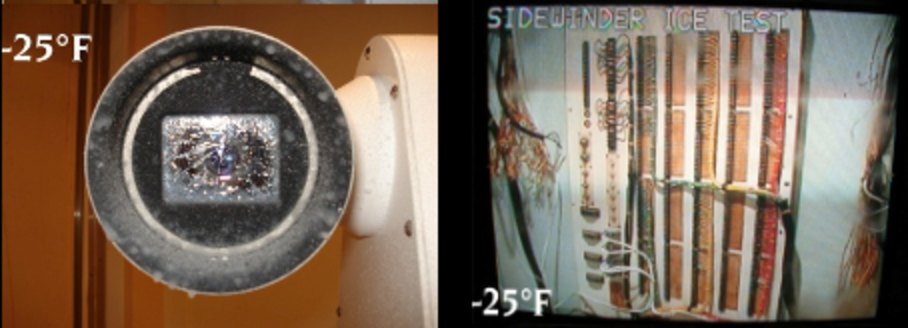
Window visibility as the chamber cools with the camera powered on.
Competing designs that heat only the border of the glass required +30°F to +40°F ambient to clear.
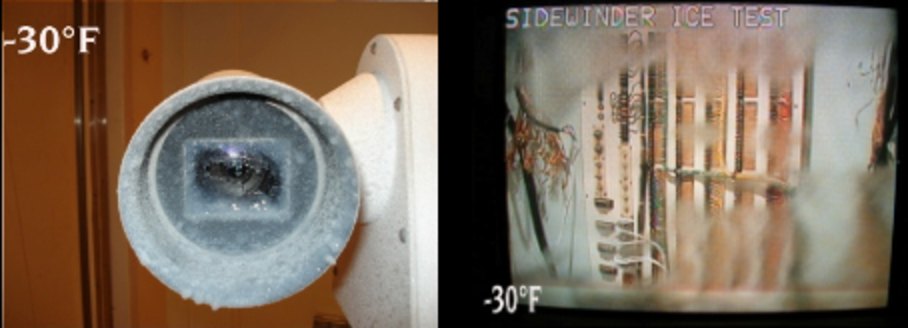
Window visibility as the chamber cools with the camera powered on.
Competing designs that heat only the border of the glass required +30°F to +40°F ambient to clear.
Camera window (left) and monitor view (right) at each temperature. TxDOT ice chamber.
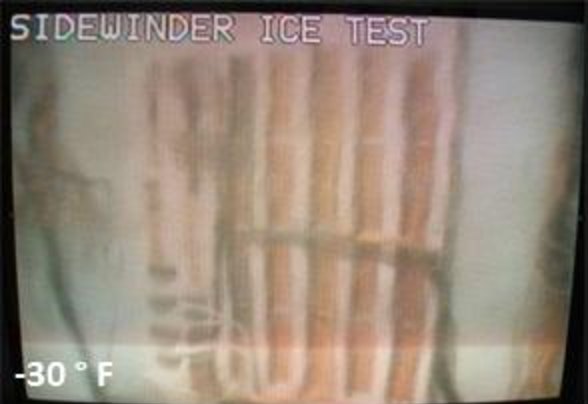
Visibility recovered after power-up from a frozen, powered-off camera. Full visibility in about 30 minutes.
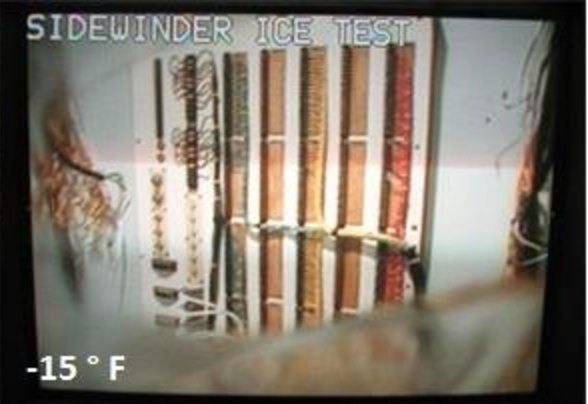
Visibility recovered after power-up from a frozen, powered-off camera. Full visibility in about 30 minutes.
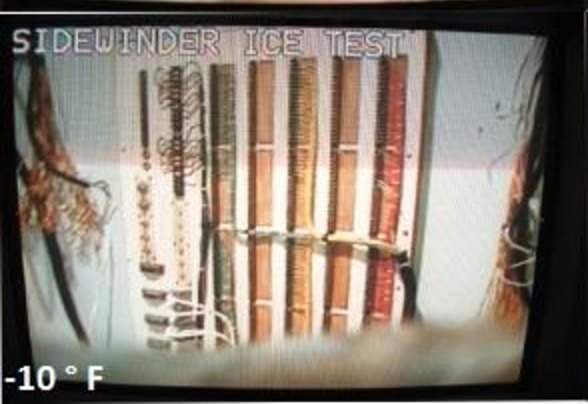
Visibility recovered after power-up from a frozen, powered-off camera. Full visibility in about 30 minutes.
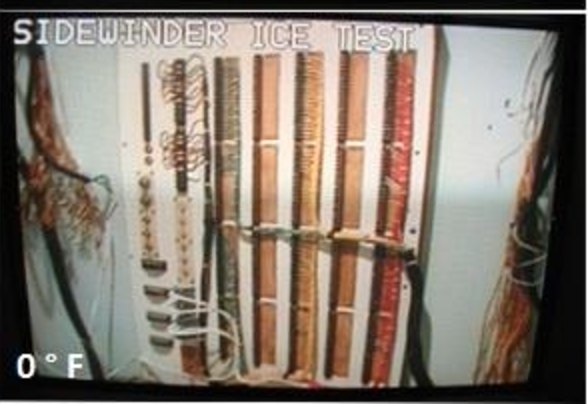
Visibility recovered after power-up from a frozen, powered-off camera. Full visibility in about 30 minutes.
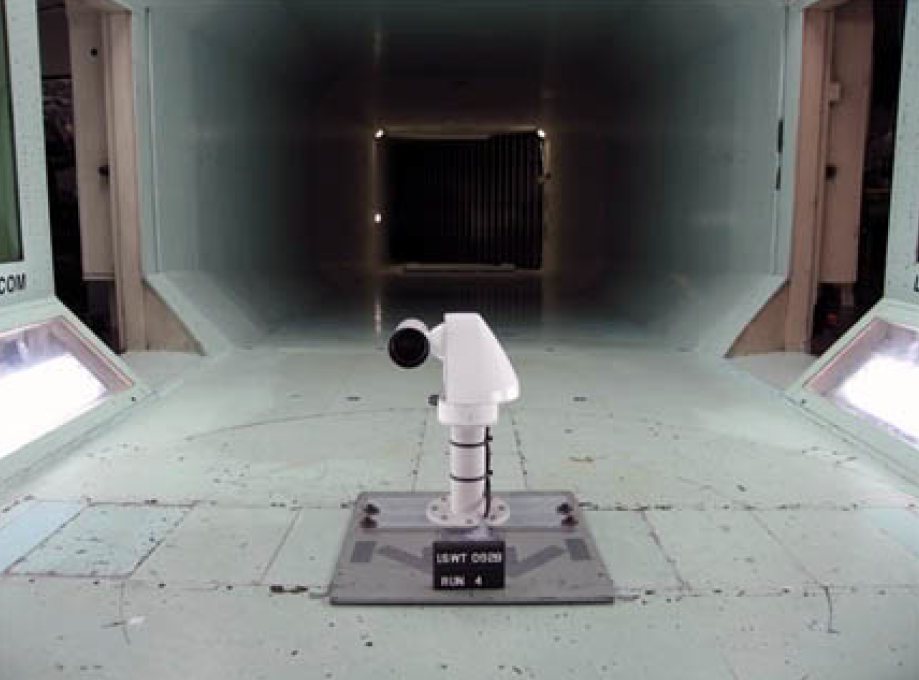
Wind tunnel tested over 150 mph
Sidewinder was tested at the San Diego Air & Space Technology Center at wind speeds above 150 mph, alongside environmental chamber testing for temperature and humidity.
Continuous pan and tilt with 0.05° preset repeatability, and a proprietary motor drive, hold the image steady in high wind. Electronic image stabilization handles the rest.
Environmental durability
Sealed to IP68, salt-fog tested, and qualified to MIL-E-5400T, with an 11.8-year mean time before failure. Every camera completes a full functional test in Ventura before it ships.
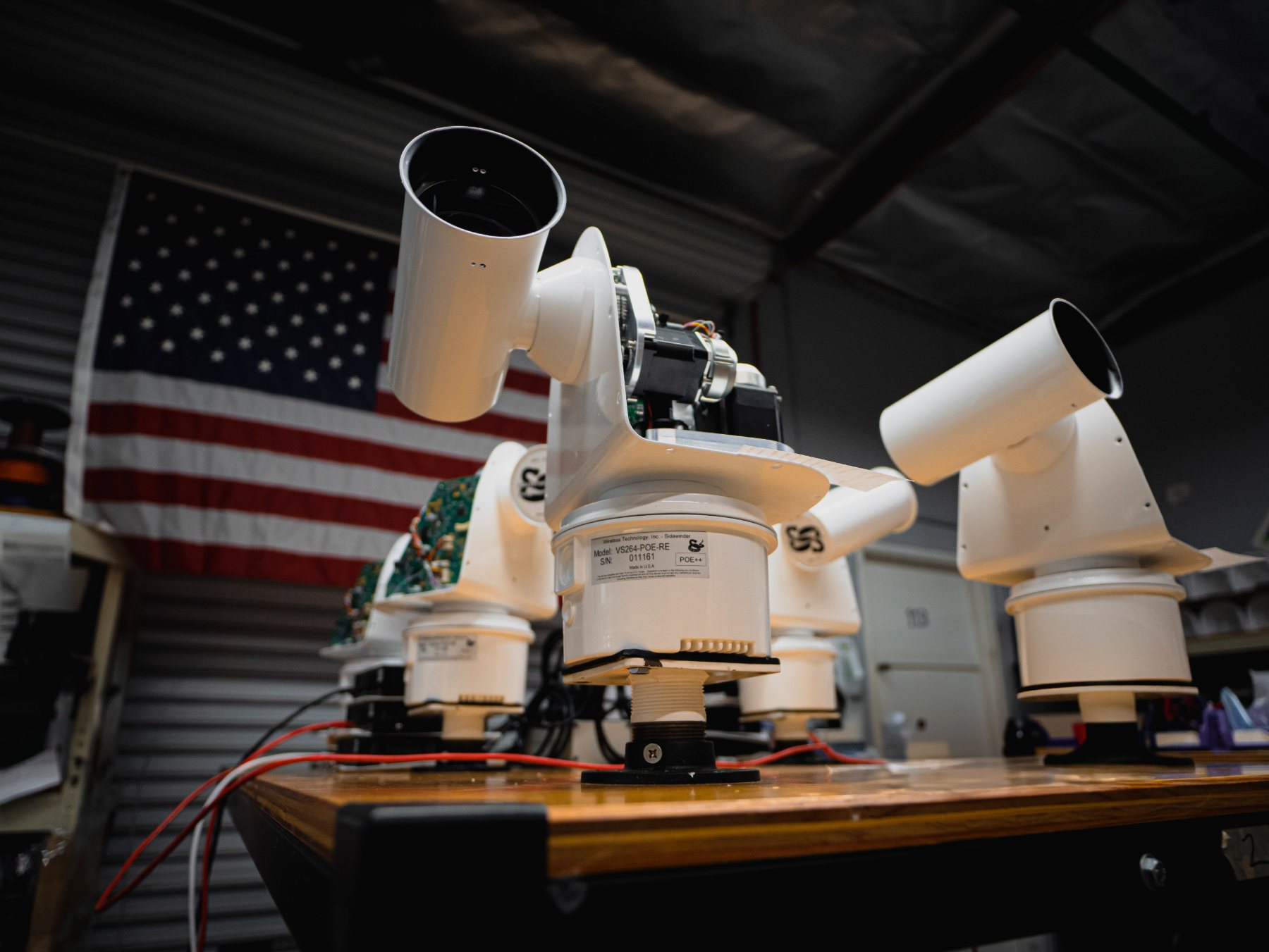
- IP68Every Sidewinder PTZ camera is submersion tested before it ships. The sealed all-aluminum housing keeps out rain, dust, wash-down spray and standing water on roadside poles, bridges and coastal sites.
- All-aluminum housingMachined aluminum body with 316 stainless steel hardware. No plastic domes or painted steel to crack, fade or corrode over a 10-plus-year outdoor deployment.
- ASTM B117 salt fogSalt-fog tested to ASTM B117 and rated NEMA 4X for coastal highways, ports and de-iced roads where road salt and marine air corrode ordinary traffic cameras.
- MIL-E5400TQualified to military environmental standard MIL-E-5400T for temperature, 100% humidity, shock and vibration, and verified in WTI's own environmental chamber.
- −40°C to +74°CFull operating range of −40°F to +165°F, tested to NEMA TS2 traffic-signal requirements, so the camera keeps working through Texas heat and Minnesota cold without an enclosure heater or cooler.
- Dual-stage surge protectionTwo stages of surge suppression on both power and data lines protect the camera from lightning-induced transients and switching surges on roadside power.
- Internal sensorsBuilt-in humidity and temperature sensors report through the Camera Control Software with on-screen alerts, so a compromised seal or heater fault is caught before video is lost.
- 11.8-year mean time before failureMean time before failure across the deployed Sidewinder fleet, based on field returns, not lab projections. Fewer bucket-truck visits and lane closures over the life of an ITS camera.
Optics and pan-tilt
- 30x optical and 12x digital zoom
- 1080p at up to 60 frames per second
- H.265 and H.264, up to 50% less bandwidth
- Wide dynamic range and low-light sensitivity
- Under 250 ms latency
- Automatic day/night switchover and defog
- Continuous 360° pan and tilt, 0.05° preset repeatability
- Up to 64 presets; 8 tours of up to 32 presets
- Automatic image invert and flip
- 8 configurable streams; single-cable PoE++
ZOOM TEST · 30x optical, 12x digital · Sidewinder VS265